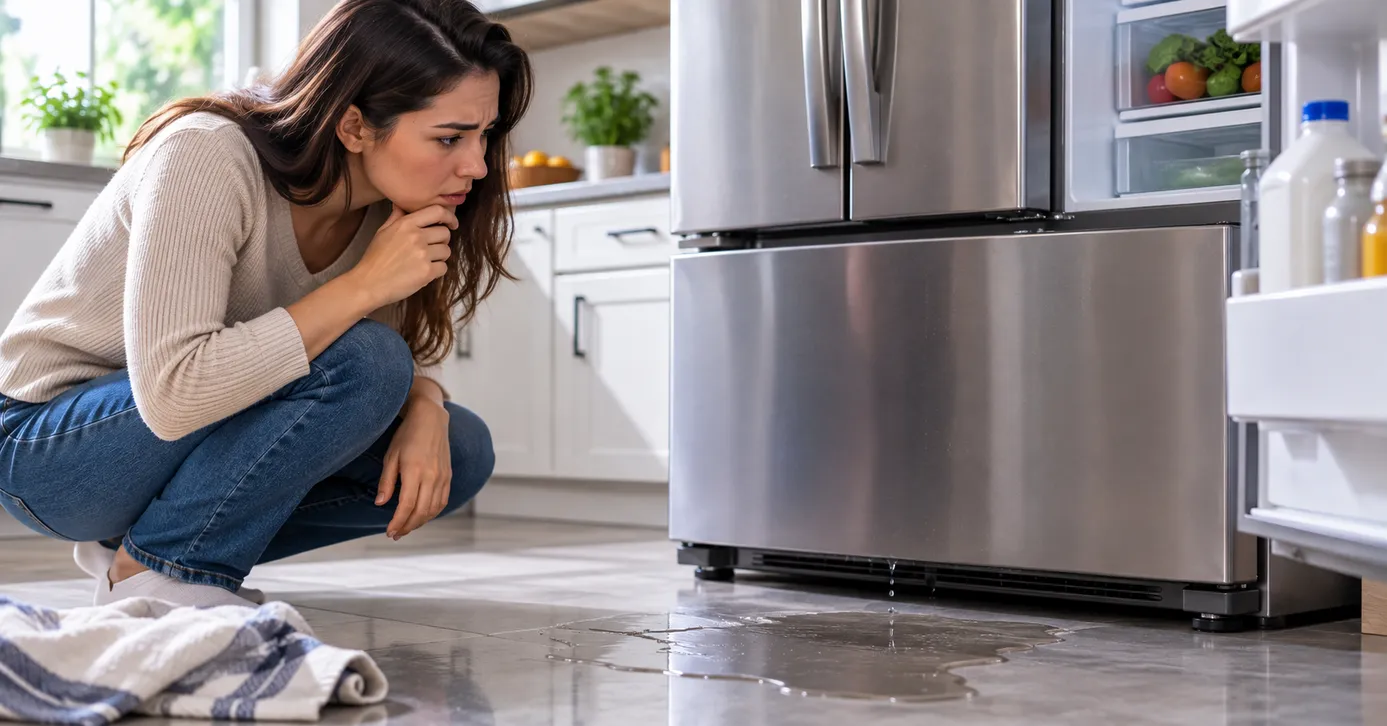
Finding water under or inside your refrigerator can be frustrating. You might notice a puddle on the kitchen floor, water collecting beneath the crisper drawers, or droplets running down the back wall.
A refrigerator leak can have several causes. Sometimes it is related to a blocked defrost drain, a water supply connection, or a door that is not closing properly. Other situations may require professional repair.
Before taking anything apart, use these checks to narrow down where the water may be coming from.
1. Check Where the Water Is Collecting
Start by identifying where you see the water. Its location can provide a useful clue, although it does not confirm the cause by itself.
Look for water in these areas:
- Inside the refrigerator: Water beneath drawers or on interior shelves may be related to drainage, condensation, or a spill.
- Under the refrigerator: A puddle on the floor may come from a water connection, drain pan overflow, or water traveling from another area.
- Near the water dispenser: If your model has a dispenser, check whether water is dripping from the dispenser area.
- Near the ice maker: A leak may be associated with the ice maker or its water supply system.
- Around the door: Moisture near the door may be caused by condensation, a poor seal, or a spill.
Dry the visible water and monitor the area briefly to see where it reappears. Avoid moving a heavy refrigerator by yourself or reaching behind it if doing so would strain the water line or power cord.
2. Check for Spills Inside the Refrigerator
Not every puddle means the refrigerator has a mechanical problem. A spilled drink, leaking food container, or melting ice can create water that looks like an appliance leak.
Check for:
- Open or poorly sealed drink containers.
- Food packages that are dripping.
- Melted ice or water from recently stored produce.
- Liquid that has run beneath a drawer or shelf.
What to do: Remove the affected items and clean the spill. Make sure containers are closed properly and that shelves and drawers are seated correctly.
If water returns after the interior has been cleaned and dried, continue with the following checks.
3. Look for a Blocked Defrost Drain
Many refrigerators use an automatic defrost system. During a defrost cycle, melted frost is directed through a drain toward a pan, where the water can evaporate.
If the drain becomes blocked by debris or ice, water may collect inside the refrigerator or freezer instead of draining away properly.
Possible signs include:
- Water collecting beneath the crisper drawers.
- A recurring puddle inside the refrigerator.
- Water or ice buildup near the bottom of the freezer.
- A problem that returns after the interior has been cleaned.
What to do: Check your owner’s manual for the location of the defrost drain and any approved cleaning procedure. Drain locations and service methods vary by model.
Do not push sharp objects into the drain or use boiling water unless the manufacturer specifically instructs you to do so. You could damage internal components.
If the drain is inaccessible, frozen over, or repeatedly becomes blocked, a technician may need to inspect it.
4. Inspect the Door Gasket
A refrigerator door that does not seal properly can allow warm, humid air to enter. This may contribute to condensation and moisture inside the appliance.
Inspect the rubber gasket around the door for:
- Dirt or sticky residue.
- Cracks, tears, or sections that have come loose.
- Areas that look folded or distorted.
- Gaps where the gasket does not appear to contact the cabinet.
Also check whether food containers, shelves, or drawers are preventing the door from closing fully.
What to do: Clean the gasket gently with a soft cloth and mild soapy water, then dry it. Remove anything obstructing the door. If the gasket is damaged or does not seal properly, it may need replacement.
5. Check the Water Supply Line
If your refrigerator has an ice maker or water dispenser, it may be connected to a household water supply. A loose or damaged connection can cause water to leak behind or beneath the appliance.
Look for visible signs such as:
- Water near the point where the supply line connects.
- A damp area behind the refrigerator.
- A kinked or visibly damaged water line.
- Water that appears after using the dispenser or ice maker.
What to do: If you can safely access the connection without moving the refrigerator or handling electrical components, look for obvious signs of moisture.
If you suspect a supply-line leak, shut off the refrigerator’s water supply using the appropriate valve if you can do so safely. Follow the manufacturer’s instructions and arrange repair if the line or connection is damaged.
Do not attempt to repair a damaged line with improvised materials.
6. Check the Ice Maker and Water Dispenser
A refrigerator with an ice maker or dispenser has additional components that may be involved in a leak.
Potential issues include:
- A water line or fitting that is not sealing properly.
- An ice maker that is not filling correctly.
- Water overflowing or spilling from an ice-related component.
- A dispenser that continues to drip after use.
If the leak seems connected to ice production or water dispensing, note when it occurs. For example, does water appear after the refrigerator makes ice, or immediately after someone uses the dispenser?
What to do: Consult the owner’s manual for model-specific checks. If the leak continues, turn off the water supply if safe and seek qualified service.
7. Check the Drain Pan
Some refrigerators have a drain pan beneath the cabinet that collects water from the defrost process. The water normally evaporates over time.
If the pan is cracked, displaced, or unable to handle the amount of water reaching it, moisture may appear beneath the refrigerator.
Possible clues include:
- Water collecting on the floor underneath the appliance.
- A leak that seems to come from the lower part of the refrigerator.
- No obvious spill inside the refrigerator.
- A recurring puddle even after the floor has been dried.
What to do: Check the owner’s manual to determine whether the drain pan is accessible for user inspection. Do not remove panels or tilt the refrigerator unless the manufacturer’s instructions specifically allow it.
A damaged or inaccessible pan should be inspected by a technician.
8. Make Sure the Refrigerator Is Properly Positioned
An appliance that is not positioned according to the manufacturer’s requirements may have trouble with door closure or water drainage.
Check whether:
- The refrigerator is stable and does not rock.
- The doors close completely.
- The appliance appears to be leaning noticeably.
- The refrigerator has been recently moved or reinstalled.
Refrigerators may require a particular front-to-back or side-to-side position. The correct setup depends on the model.
What to do: Consult the installation instructions before adjusting the refrigerator’s leveling feet. If you are unsure how to reposition it safely, ask for professional assistance.
9. Check for Excessive Frost or Condensation
Moisture can sometimes accumulate when humid air enters the refrigerator or when the defrost system is not working as expected.
Look for:
- Unusual frost buildup inside the freezer.
- Water droplets on interior walls or shelves.
- Moisture around the door opening.
- Ice forming in areas where it does not normally appear.
Make sure the doors are not being left open for long periods and that food packages are not obstructing the seal.
If excessive frost keeps returning, the issue may involve airflow, defrosting, or another component that requires further inspection.
Do not chip away ice with a knife or screwdriver. Sharp tools can damage the appliance.
10. Know When to Call a Refrigerator Repair Technician
Some leaks can be resolved by cleaning up a spill or correcting a door obstruction. Others involve water connections, internal components, or drainage systems that require professional attention.
Arrange service if:
- Water continues to appear after basic checks.
- You find a damaged water supply line or leaking connection.
- The leak seems to come from behind an inaccessible panel.
- The drain repeatedly becomes blocked.
- The refrigerator is also not cooling properly.
- You notice electrical warning signs, such as a burning smell or a damaged power cord.
- You cannot identify the source of the leak safely.
If water is near electrical components, avoid touching the wet area or attempting repairs. If you can safely disconnect power without contacting water or damaged wiring, do so; otherwise, keep clear and get qualified assistance.
How to Protect Your Kitchen While You Investigate
A refrigerator leak can damage flooring and create a slipping hazard.
- Wipe up standing water promptly.
- Keep children and pets away from wet areas.
- Place towels or a shallow container near the leak only if it is safe to do so.
- Avoid pulling the refrigerator out if doing so could damage its water line or power cord.
- Check the refrigerator’s temperature and protect perishable food if cooling has been affected.
If the leak is substantial or you cannot stop it safely, shut off the water supply if applicable and contact a qualified technician.
Frequently Asked Questions
Why is my refrigerator leaking water onto the floor?
Possible causes include a water supply connection, a drain pan problem, a blocked defrost drain, or water escaping from inside the appliance. The location and timing of the leak can help narrow down the possibilities.
Why is there water under the crisper drawers?
Water beneath the crisper drawers may be associated with a blocked defrost drain, condensation, or a spill that has traveled beneath the drawers. Clean and dry the area, then check whether the water returns.
Can a refrigerator leak water even if it is still cooling?
Yes. A refrigerator may continue cooling while experiencing a drainage or water-line problem. However, if the leak is accompanied by rising temperatures or unusual operation, investigate promptly.
Should I turn off the water supply to my refrigerator?
If your refrigerator has a water connection and you suspect that line or its fittings are leaking, shutting off the supply may help prevent further water damage. Only do this if you can safely identify and operate the appropriate valve.
Is a small puddle under the refrigerator normal?
A puddle should not automatically be considered normal. Although some models collect defrost water in a drain pan, recurring water on the floor may indicate a problem that needs investigation.
The Bottom Line
If your refrigerator is leaking water, start by checking where the water is collecting and ruling out simple spills. Then inspect the door gasket, look for signs of a blocked defrost drain, and consider whether the leak may be connected to an ice maker or water dispenser.
Use your owner’s manual for model-specific instructions, and avoid removing panels or handling electrical parts if you are not qualified. If the leak continues, involves a water connection, or appears near electrical components, contact a refrigerator repair technician.
Suggested Internal Links: